Garcia Marquez's Questionable Friend
“This is the Fidel Castro that I believe I know. A man of austere habits and insatiable illusions, with an old-fashioned formal education of cautious words and subdued tones, and incapable of conceiving any idea that is not colossal.”
-Gabriel Garcia Marquez

When I first heard of the friendship between Gabriel Garcia Marquez(GM henceforth) and Fidel Castro, I assumed it another Castro. Surely this wasn't the same Fidel Castro, who's party censors literature, visual media, music and the internet like something out of 'V for Vendetta'. The same Castro who, (as described in an article published by Maria Rodriguez in 1999) ordered the burning and burying of hundreds of books donated to Cuba by the government of Spain. Even those on seemingly non-controversial topics such as children's literature and medical textbooks were destroyed. Cuban authorities found copies of the Universal Declaration of Human Rights in a few copied and thought the wisest course was to destroy every one of the books. Fidel Castro has long been a divisive figure in international politics and remains just as divisive in death. His friendship with Gabo was an unlikely one that has fans of the writer very, very confused.
Fidel Castro played an unexpected role in global literature. The Cuban president acted as an unofficial editor for GM, providing line-by-line corrections for the writer. GM would send completed manuscripts to Havana before submitting them to his publisher. GM was a supporter of the Cuban revolution, support he never renounced, despite Castro’s record of human rights abuses.
Castro’s corrections were factual and grammatical rather than ideological. A correction he made was in Chronicle of a Death Foretold, where Castro pointed out an error in the specifications of a hunting rifle. Elsewhere, Castro offered advice about the compatibility of bullets with guns used by GM characters and even advised him on math.
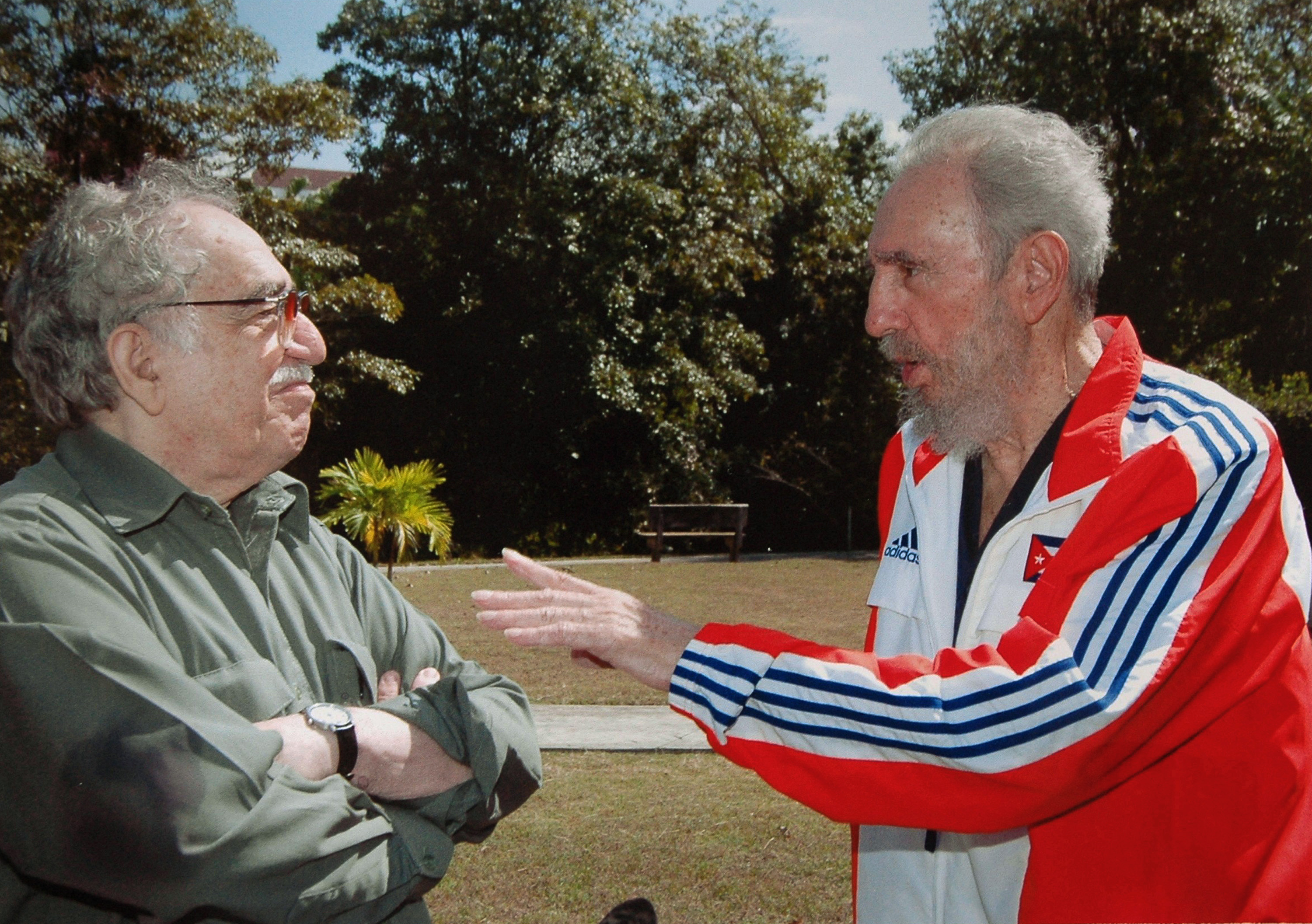
"Fidel Castro is there to win". GM said. "His attitude in the face of defeat, even in the most minimal actions of everyday life, would seem to obey a private logic: he does not even admit it, and does not have a minute's peace until he succeeds in inverting the terms and converting it into victory."
Castro was due to give interviews to journalists from Agence France Press and Reuters, but instead suddenly appeared at the hotel where Gabo was staying and asked to talk to him. This first personal encounter between the two achieved an instant connection. Castro’s interview with the waiting journalists was cancelled and Castro instead accompanied Gabo to Havana airport to see him off.
GM, who despite being a Nobel laureate, was for decades barred from entering the United States due to his friendship with Castro. He makes clear his close bond with the Cuban revolutionary leader in his personal archives. Castro appears in an album titled "Amigos" that includes photos of Garcia Marquez with other famous figures such as Woody Allen, Carmen Balcells, and Pablo Neruda.

The arrest and show trial of Heberto Padilla, a poet who had been critical of Castro’s revolution, was greeted by dismay by many of Castro’s formerly steadfast supporters – including Mario Vargas Llosa, the Nobel Prize-winning writer – a close friend of Garcia Marquez. Gabo, however, continued to support Castro – to the surprise of many. The author’s influence was important, however, in the decision to free several high-profile political prisoners (including Padilla).
If there was one person that wasn’t afraid to criticize Castro, it was GM. But he was smart. He never criticized Castro in public. It would be suicide. GM preferred to discuss any criticisms of Castro with the Cuban leader himself. They had some profound differences of opinion – for example, in the case of former Cuban general Arnaldo Ochoa and colonel Tony de la Guardia, who were executed for drug smuggling and treason in 1989. The general’s daughter told us Garcia Marquez tried to intervene to change Castro’s mind, but to no avail.


Comments
Post a Comment